
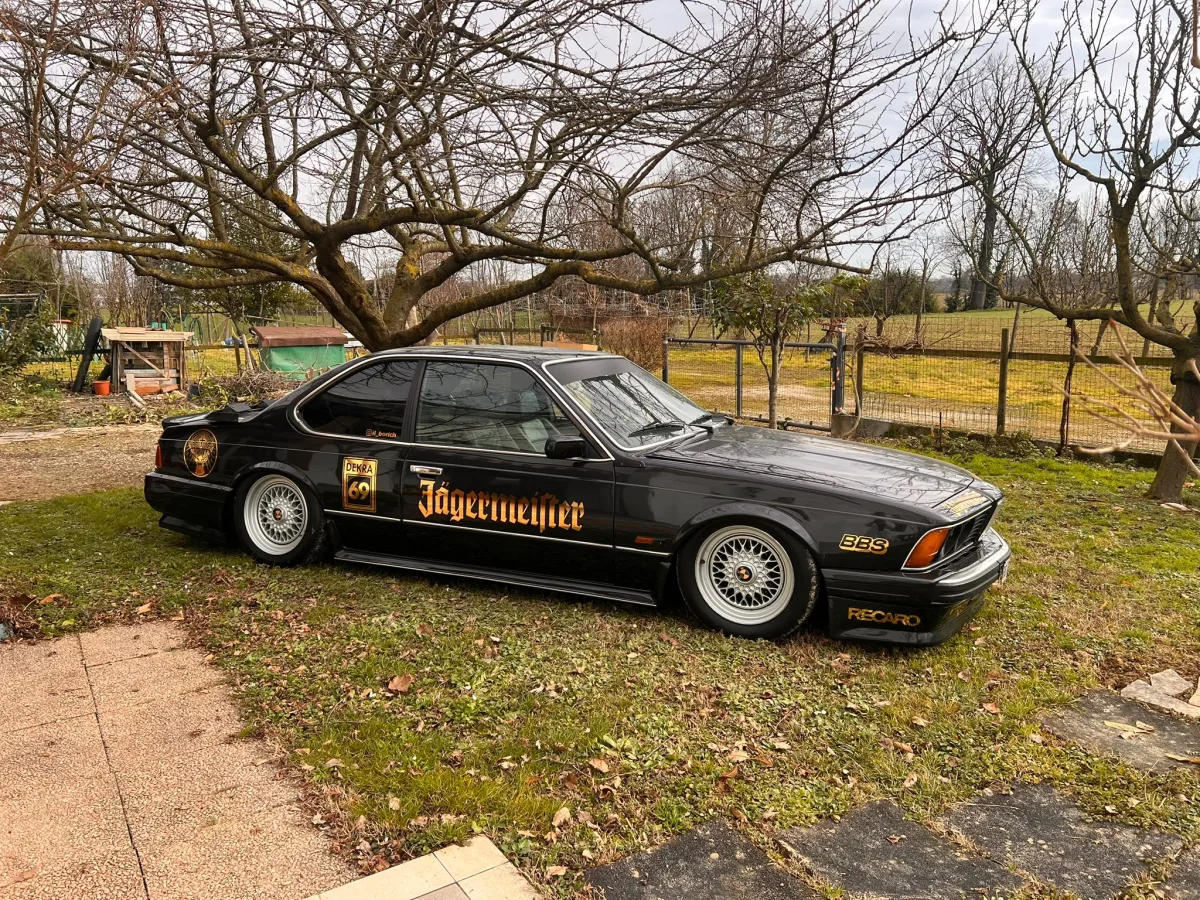
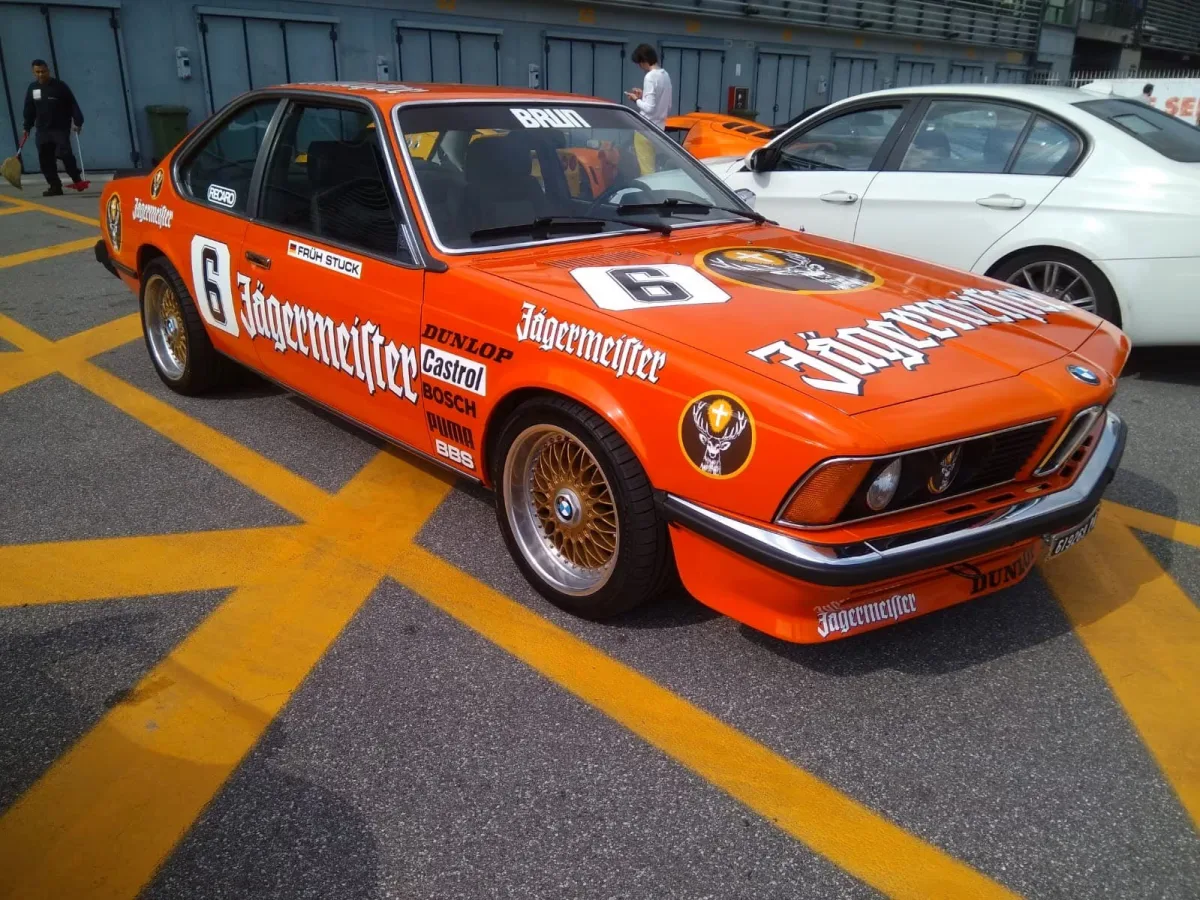
The BMW 6 Series E24 is one of the most iconic European coupés from the second half of the 1970s through the late 1980s. Elegant, long, low and instantly recognisable thanks to its sharp front end, the E24 has become a true collector’s grand tourer over time. In the BuyModCars context, it represents a very interesting base for anyone looking for a classic car that is sporty yet refined, suitable both for faithful restoration and for tasteful, coherent OEM+ projects.
BMW 6 Series E24: BMW’s idea of a grand touring coupé
The BMW 6 Series E24 was introduced in 1976 as the spiritual successor to the BMW E9 coupés. It remained in production until 1989, going through more than a decade of technical and stylistic evolution. The body was always a two-door coupé, with a front engine and rear-wheel drive, following a classic formula that strongly contributed to its appeal.
The design, created by Paul Bracq, is one of the car’s most recognisable elements. The long bonnet, rear-set cabin, strong rear pillar and forward-leaning nose create the “shark nose” silhouette that still makes the E24 immediately identifiable today. It is not an extreme sports car, but a grand tourer designed to travel quickly, with comfort, presence and mechanical quality.
An elegant project with a strong technical base
The 6 Series E24 was born as a high-end coupé, but it retained a very BMW-like layout: straight-six engines, rear-wheel drive and balanced handling. Most versions used engines from the M30 family, one of the most representative straight-sixes in BMW history. The main displacements ranged from 2.8 to 3.5 litres, depending on year and version.
This architecture still makes the E24 particularly interesting today. It is not a small or light car like a compact sports hatch, but it offers a very different combination: torque, smoothness, high-speed stability and the road presence of a true grand touring coupé. It is a car that should be interpreted more as an object of style and driving pleasure than as a base for aggressive modifications.
Early versions: 630 CS, 633 CSi and 628 CSi
The first E24 models were sold in versions such as 630 CS and 633 CSi. The CS badge recalled BMW’s tradition of sporting coupés, while CSi indicated fuel injection. These early variants defined the initial character of the 6 Series: an elegant coupé, fast for its time, but still connected to a classic 1970s approach.
In 1979, the 628 CSi also arrived, powered by a 2.8-litre fuel-injected engine and intended as a more balanced version with lower running costs. It is not the most desirable version for performance-focused enthusiasts, but today it can be interesting for those looking for a more accessible, refined E24 that fits the touring nature of the car.
BMW 635 CSi: the symbolic version of the 6 Series E24
The BMW 635 CSi is probably the most representative version of the E24. Introduced at the end of the 1970s, it pushed the 6 Series toward a sportier, more performance-oriented image. It used a large-displacement straight-six engine, with European versions reaching around 218 hp, depending on year and technical specification.
The 635 CSi is the meeting point between elegance and sportiness. It has the presence of a grand tourer, but also important performance for its period. It is the version most often associated with the classic E24 image: flowing bodywork, sporty wheel designs, refined interiors, a full-bodied engine and the driving feel of a high-end German coupé.
In the BuyModCars world, the 635 CSi is one of the most interesting bases because it allows extremely coherent projects: period-style Alpina or BBS wheels, a slightly revised suspension setup, a discreet exhaust, restored interiors and OEM+ exterior details. The car does not need to be transformed: its value lies precisely in its lines, proportions and original engineering.
M635CSi: the 6 Series with a Motorsport soul
At the top of the range sits the BMW M635CSi, introduced in the 1980s as a version developed by BMW Motorsport. It was the first major 6 Series coupé to receive a true M identity, anticipating the concept that would also be marketed in North America under the M6 name.
The main difference lies in the engine. The M635CSi used the M88/3 straight-six, conceptually derived from the technical family associated with the BMW M1. In European specification, it produced around 286 hp, with a twin-cam layout and a much sportier character than the regular M30-powered versions.
The M635CSi is not simply a more powerful 635 CSi. It is rarer, more specialised and more delicate to treat. Today it requires a very conservative approach, because specific components, engine, interior and original details have a major impact on value. In a modification context, the most correct logic is technical restoration and OEM+, avoiding invasive or hard-to-reverse interventions.
Early phase and restyling: how the E24 changed over time
The 6 Series E24 went through several evolutions during its long career. The earliest cars were closer to the technical layout of BMWs from the 1970s, while from 1982 the model received an important update based on more modern components from the E28 5 Series. Several technical aspects changed: chassis, suspension, electronics, interior and corrosion protection were all significantly improved.
This transition is very important for anyone considering buying or building a project based on an E24 today. Pre-facelift cars have a purer charm more closely linked to the 1970s, but may require more attention in terms of parts availability and corrosion checks. Later versions are generally more mature, more driveable and closer to the idea of a usable youngtimer.
A further update arrived in 1987, with aesthetic and technical changes that made the final E24 models more modern, also in appearance. These late cars are often appreciated by those looking for a more refined and complete 6 Series, closer to late-1980s BMW standards.
Design: why the E24 is still so recognisable
The charm of the 6 Series E24 comes mainly from its proportions. It is a long coupé, with an important bonnet and a rear-set cabin, yet it never looks heavy. The low, forward-leaning front end, round twin headlights and taut side profile give it an immediately recognisable character.
It is a car that communicates elegance more than aggression. Even in its most powerful versions, its language remains that of a grand tourer: a car made to travel fast, with style, not to look extreme. This is a key point for any BuyModCars project based on an E24: the intervention should enhance its elegance, not cover it.
Interior: comfort, quality and 1980s atmosphere
The cabin of the BMW 6 Series E24 is one of the elements that best explains the car’s positioning. The driver-oriented dashboard, low driving position, supportive front seats and attention to materials create the atmosphere of a high-end coupé.
On richer versions, especially the 635 CSi and M635CSi, the interior can become a decisive factor in the value of the car. Leather, sports seats, correct steering wheel, intact instrumentation and well-preserved panels are fundamental aspects. An E24 with well-kept original interiors immediately conveys greater value than a car modified without coherence.
Why the BMW 6 Series E24 is interesting in the BuyModCars world
The E24 is a perfect base for those looking for a characterful youngtimer, but not a compact sports car or a classic saloon. It is an elegant coupé, with noble mechanics and a strong visual identity. In the BuyModCars context, it can be interpreted in three main ways: conservative restoration, OEM+ project or a build inspired by Alpina style and German coupés of the 1980s.
Conservative restoration is ideal for rare, well-optioned cars or examples with unusual colour combinations. OEM+ works very well on the 628 CSi, 633 CSi and 635 CSi, especially with interventions on suspension, wheels, exhaust, lighting and interior details. For the M635CSi, however, the priority should be preserving the original identity, given the historical and technical value of the model.
Coherent modifications: wheels, suspension and period details
The 6 Series E24 responds very well to light modifications that are coherent with its historical period. BBS, Alpina or other classic German wheel designs can greatly enhance the car’s lines, as long as the dimensions remain proportionate. A slightly lowered suspension setup can improve road presence, but should avoid extremes that would damage comfort and the grand touring character.
The exhaust can also be updated, but with care. An E24 should not become excessively loud or aggressive. The BMW straight-six has a naturally elegant and mechanical tone: the goal should be to enhance it, not cover it. The same applies to the exterior: spoilers, aerodynamic add-ons, liveries and sporty details only work if they are coherent with the period and the starting version.
What to check before buying or starting a project
Before starting a project based on a BMW 6 Series E24, it is essential to begin with a solid car. The body requires careful inspection, especially around the floor, wheel arches, drainage points, boot area, windscreen and corrosion-prone zones. The quality of an E24 restoration depends heavily on the condition of the shell.
The mechanical side also deserves attention. M30 engines are known for strength and longevity, but they require proper maintenance and checks on cooling, fuel delivery, timing components, electrical system and transmission. On M635CSi versions, this becomes even more important, because the Motorsport engine is rarer and more expensive to maintain than the regular M30 straight-sixes.
A coupé to respect more than transform
The BMW 6 Series E24 is not a car that needs major transformations to be interesting. Its strength is already present in the original project: proportions, mechanics, image and build quality. For this reason, the best interpretations are those that add character without erasing the car’s identity.
In the BuyModCars world, the E24 represents one of the most refined bases for a classic project. A well-configured 635 CSi can become an extremely charming youngtimer grand tourer; a 628 CSi can be an elegant and usable coupé; an M635CSi should be considered almost as a historical Motorsport object. In every case, the rule remains the same: enhance the shark nose line, respect the straight-six engine and build a project coherent with the BMW soul of the 1980s.