
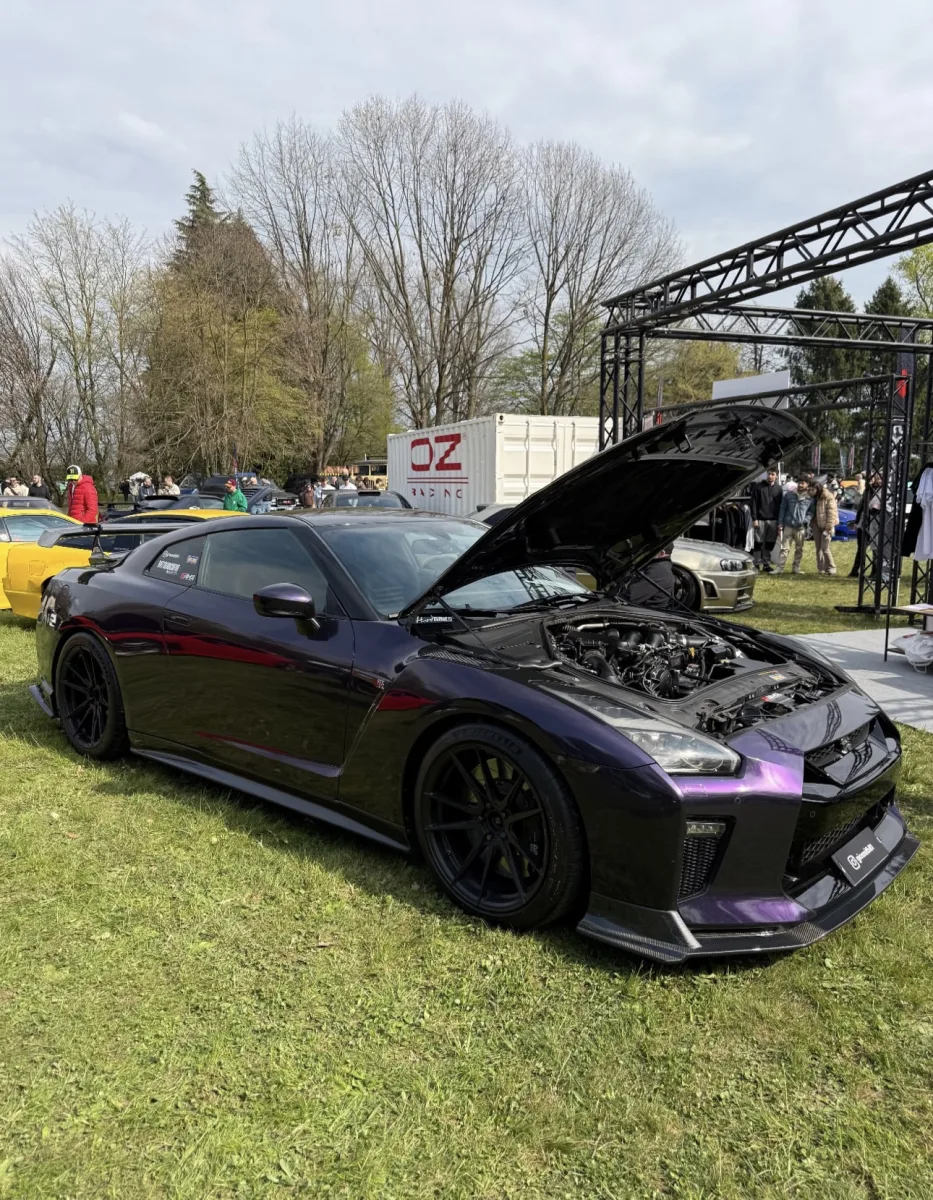
The Nissan GT-R R35 represents one of the most revolutionary supercars of the modern era. Launched in 2007 as the successor to the Skyline GT-R, the R35 introduced a new level of electronic technology, extreme performance, and intelligent all-wheel drive, quickly becoming one of the most respected platforms in the world of performance, track day, and ultra-high-performance tuning.
History and philosophy of the Nissan GT-R R35
Officially unveiled in 2007, the Nissan GT-R R35 marked an important turning point in the history of the GT-R. For the first time, the model was no longer a “Skyline,” but became a completely new platform designed to compete with the best European supercars.
Nissan developed the R35 with a highly technological approach: a hand-built twin-turbo engine, an advanced AWD system, and sophisticated electronic management controlling every aspect of the driving dynamics.
Why the GT-R R35 is an extraordinary tuning platform
In the world of modern supercars, the GT-R R35 has become one of the favorite platforms among tuners thanks to the enormous potential of its engine and the strength of its transmission.
- rigid chassis designed to handle very high power levels
- advanced AWD system with electronic management
- twin-turbo V6 engine with huge tuning potential
- highly developed global aftermarket support
VR38DETT engine: the heart of the modern GT-R
The Nissan GT-R R35 uses the VR38DETT, a 3.8-liter twin-turbo V6 hand-assembled by specialized technicians at Nissan’s Yokohama plant.
From the very first version, the engine was designed to deliver high performance and great reliability even under heavy mechanical stress.
The most common modifications include:
- high-flow turbocharger upgrades
- larger intercoolers
- performance exhaust systems
- ECU remaps and aftermarket engine management systems
With advanced builds, the VR38DETT can easily exceed outputs of over 1000 HP, making the R35 one of the most extreme platforms in the world of modern tuning.
Technology and driving dynamics
The GT-R R35 is famous for its level of technology. The ATTESA E-TS all-wheel-drive system works together with the rear-mounted dual-clutch transmission, creating a transaxle configuration that improves weight distribution.
Numerous sensors constantly monitor acceleration, steering angle, wheel slip, and torque distribution, ensuring high performance and excellent stability even in the most demanding conditions.
Suspension, transmission, and brakes
In Nissan GT-R R35 tuning projects, the main areas of focus are suspension, transmission, and power management.
- Suspension: adjustable coilovers and track-day-specific setups
- Transmission: reinforced dual-clutch gearbox
- Brakes: upgraded Brembo systems and performance discs
Design and presence in the automotive world
The design of the GT-R R35 is extremely functional: every aerodynamic element is engineered to improve stability and cooling.
Aggressive lines, wide tracks, and pronounced air intakes make the R35 immediately recognizable among modern supercars.
Common features in tuning projects include:
- carbon fiber aerodynamic kits
- ultra-light high-performance wheels
- aerodynamic setups for time attack and track day use
- street performance or racing configurations
Why the Nissan GT-R R35 is considered a modern supercar
The R35 redefined the concept of performance in the world of modern sports cars, proving that a highly technological platform can compete with the best European supercars.
Even today, it remains one of the most widely used cars for high-performance, drag racing, and track build projects.